Reciprocity Network
Rooted in the Sacred Valley. Connected through ayni
(Ayni: the Andean principle of reciprocity — what is given returns. We don’t translate it as “reciprocity” because ayni is not an equivalent; it is the original.)
Across Peru’s Sacred Valley, profound transformations are taking place. Glaciers are retreating, water cycles are changing, and soils are under increasing pressure. Dependence on external agricultural inputs is growing, while younger generations are leaving rural communities. But this is not simply a story of loss. Andean communities continue to hold native seeds, living agricultural knowledge, communal forms of organization, collective work, and relationships with land and water built across generations. We begin with what is already here.
We are part of this territory
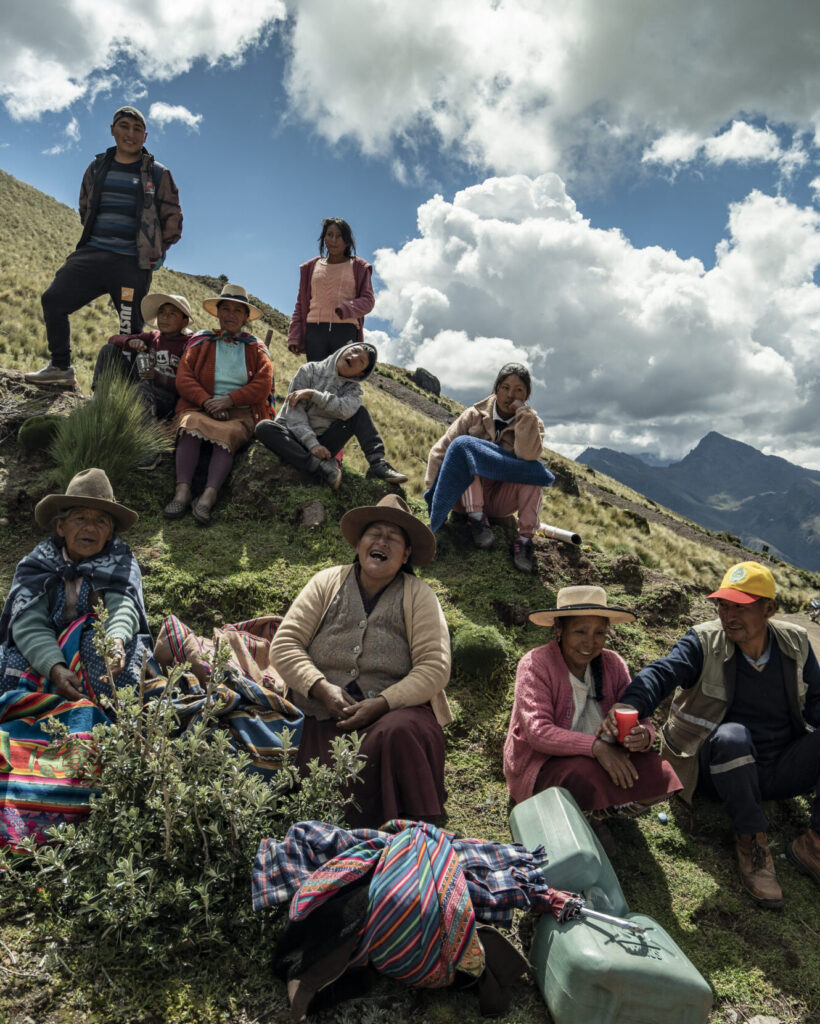
Reciprocity Network grows from Pachachaca and Reforesta Calca, two interconnected initiatives rooted in Calca and the Sacred Valley. Pachachaca has grown through years of relationships with children, families, farmers, communities, and local organizations — we are not an outside organization arriving to work with communities; we live here, work here, and are part of this territory. Experiences such as Paypa, a Pachachaca program focused on the children and families of Calca, have taught us how deeply education, food, family economies, land, and water are connected. Through Reforesta Calca, these relationships extend across the landscape through native reforestation, soil restoration, water protection, and collective ecological action. We are one part of a larger community already caring for this territory.
Ayni, not intervention
Ayni is not charity, and it is not a project methodology. It is a principle older than any development framework: people, communities, and territories depend on one another, and that dependence is lived, not administered. Here, mountains, water, forests, animals, and people are connected — not as a metaphor, but as the ground we stand on. We take care of one another not through transactions but through relationships, because our well-being is bound together.
The network grows through relationships between farmers, families, communities, elders, young people, local organizations, and others already working across the territory, and there is no single model to reproduce. We begin with listening, community assemblies, shared questions, and locally defined priorities. We also know that no community speaks with one voice: women and men, elders and youth, those with land and those without, do not always want the same things. Listening means listening to those differences, not smoothing them over. Each territory has its own knowledge, needs, contradictions, and possibilities.
Sumaq kawsay, not resilience
We choose our words carefully, because words carry theories of change. You may be used to hearing about “resilient communities.” Resilience literally means absorbing a shock and returning to shape — a fine quality, but a defensive one, a word that comes from engineering and ecology and was applied to communities of the Global South from the outside. It asks: can these people endure?
We start from a different premise. Sumaq kawsay — sumaq: beautiful, harmonious; kawsay: life — means living well, in fullness, in balance with the territory and with each other. It is an Andean principle, made of the same material as ayni, the reciprocity our network is named after. So this is not a story about communities surviving; it is a story about communities building a good life, and it works. Using sumaq kawsay is not decoration. It says that Andean thought is knowledge, not folklore, and that our theory of change comes from the territory itself.
Knowledge moves in many directions
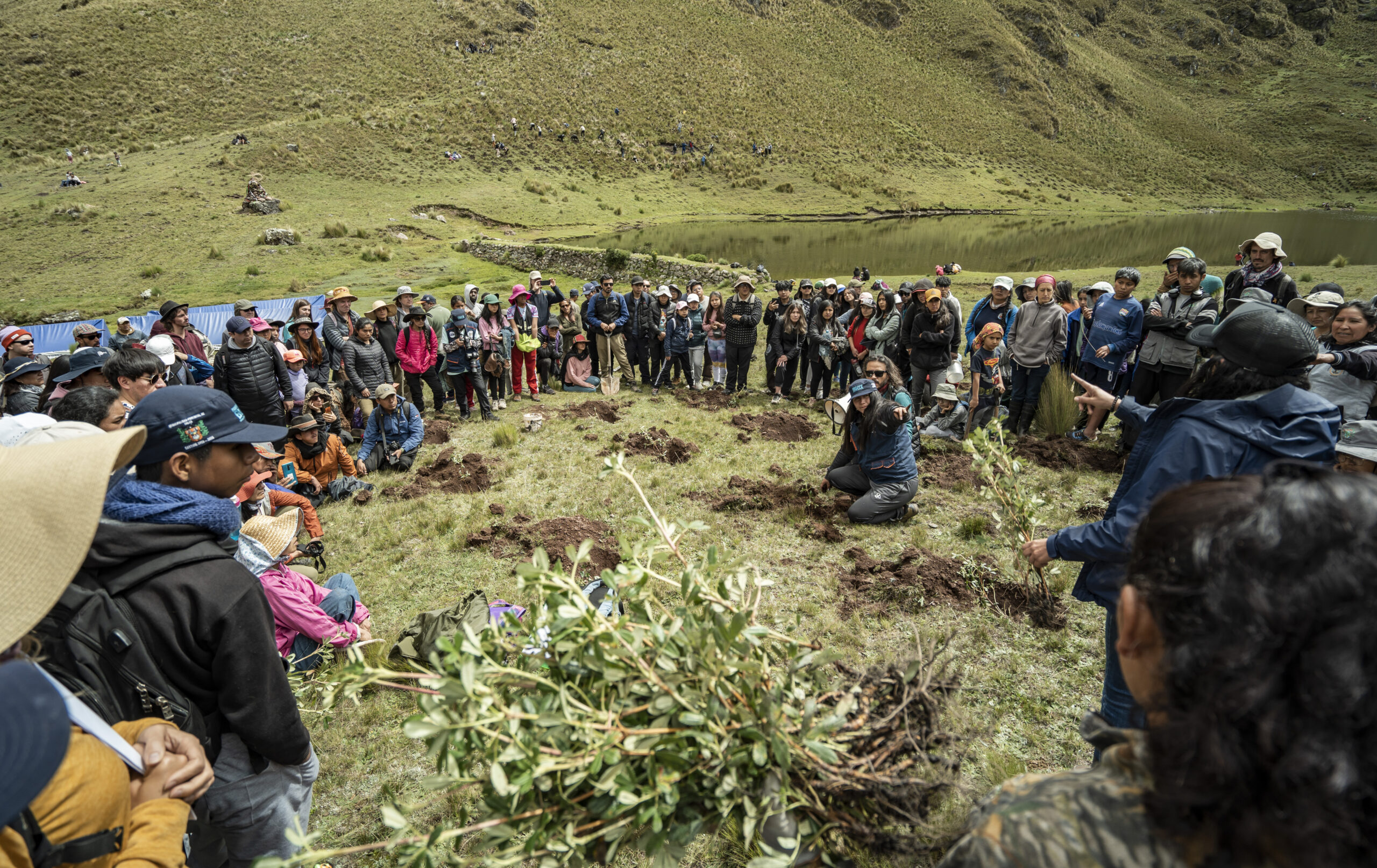
You may know these practices as “regenerative agriculture.” That term was coined far from here, and it arrived with funding structures attached to it. The practices it names — living soils, native seeds, terraces, polycultures, fallows, water care — have existed in Andean agriculture for generations, under their own names, within their own systems of meaning: chakra, minka, waru waru, suelos vivos.
Reciprocity Network creates spaces where different knowledge systems can enter into conversation: living Andean agricultural practices, farmer-to-farmer experimentation, agroecology, permaculture, science, and other approaches. The purpose is not to replace one system with another, nor to translate Andean knowledge into the categories that make it fundable. It is to experiment, exchange, adapt, and learn together — to strengthen soil fertility and agricultural diversity, to reduce dependence on external inputs, and to strengthen food autonomy and community control over how food is produced, transformed, exchanged, and valued. When we use terms like “regenerative,” we use them as bridges for those who don’t yet have other words. The knowledge itself has never needed the label.
A living territory
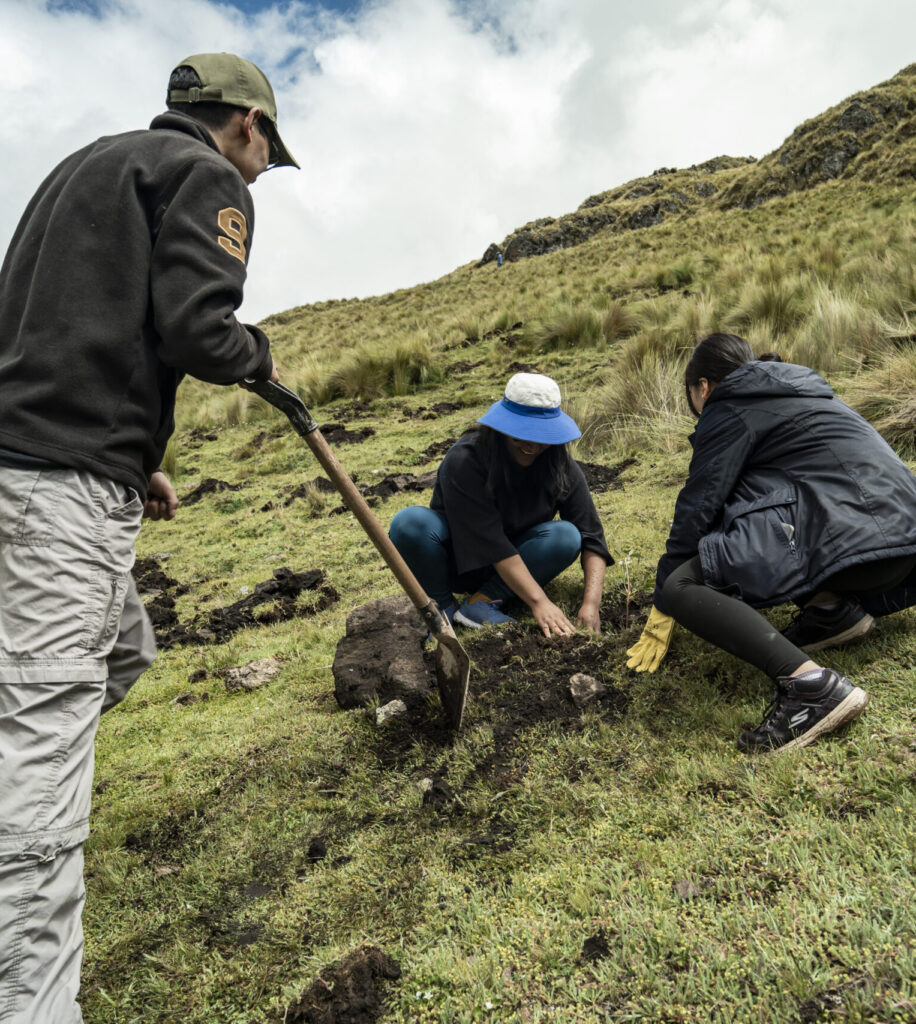
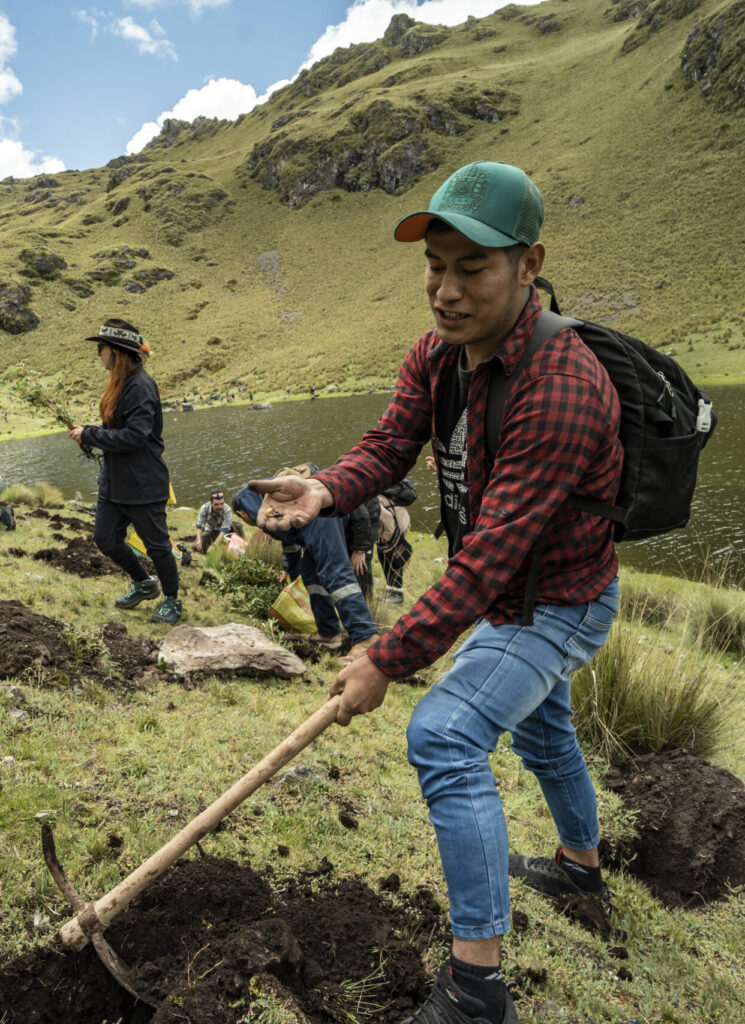
A farm does not end at the edge of a field. Here, water, mountains, forests, farms, animals, and communities are interconnected; they form a living territory — not a set of “ecosystem services,” but relationships with names, histories, and obligations. Through Reforesta Calca, the network connects agriculture with native reforestation, soil restoration, watershed protection, agroforestry, and the regeneration of local ecosystems, because what happens upstream matters downstream: a forest cared for upstream can mean water for families downstream.
A forest is not carbon. It is shade, water, birds, firewood, memory, and we resist measuring it only in what can be compensated or sold. Caring for the territory means caring for the relationships within it.
Tambos
Places where ayni can happen.
We work with a local idea: the tambo, a traditional Andean place of rest, exchange, and hospitality along the roads. We use it carefully — not as a reconstruction of the past, and not as our brand. Communities name their own places and define what happens in them. A tambo can be where seeds, food, tools, knowledge, and relationships circulate: a seed bank, a communal kitchen, a nursery, a space for learning. Each one takes shape according to its community and territory; they do not need to be identical, and they do not belong to us. The tambos are places, communities give them meaning, ayni connects them — they are the nodes of the network, convergence places where the territory meets itself.
We are starting with relationships
The work has already begun. We have been invited to accompany processes in two Andean communities — Saqllo and Huamanchoque — on their terms: agriculture, land, and priorities they themselves have defined. We are starting small, listening, experimenting, learning, and building relationships that can last.
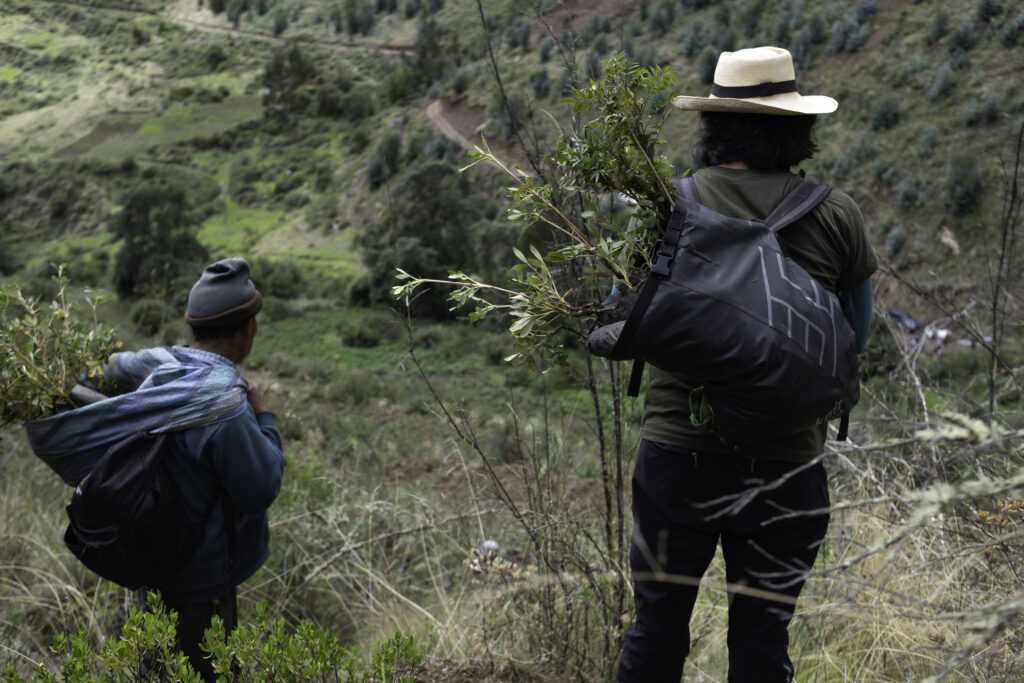
What emerges in one community can travel to another — not as a model to be replicated, but as experience that can be shared, questioned, adapted, or rejected. That last word matters, because refusal is part of reciprocity: a community that says no teaches us as much as one that says yes. A seed can travel, an idea can travel, a technique can travel — knowledge can move in many directions.
What is already here?
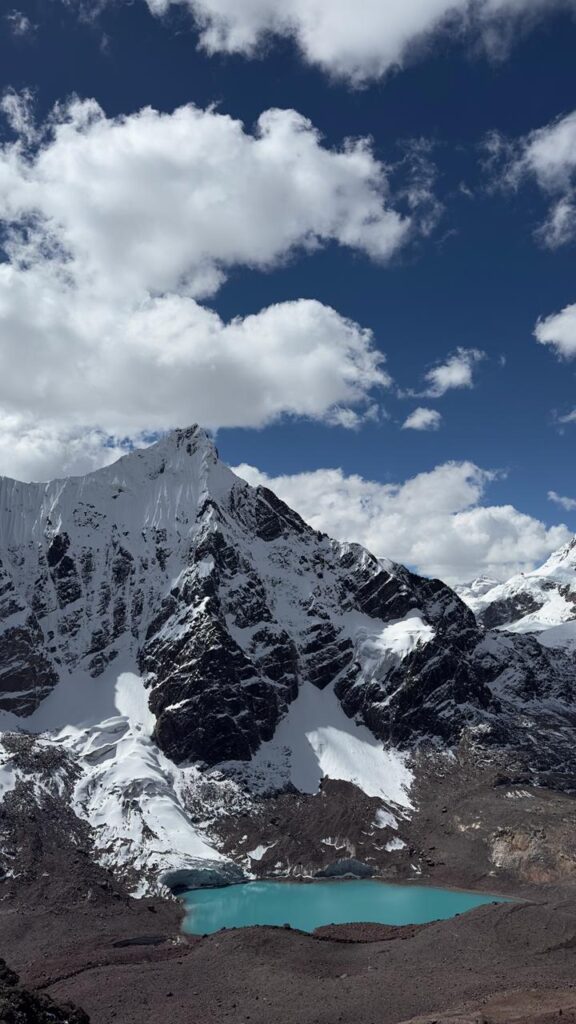
Development has too often described rural territories through what they supposedly lack. We begin somewhere else. There are seeds and farmers, living knowledge, young people and elders — with their tensions, and conversations worth having. There is communal organization and internal debate about what it should become; forests being restored; families experimenting with different ways of producing food; communities imagining their own futures. And above all, there are relationships.
A community may hold a seed another community needs; a farmer may have discovered something another family wants to try; an elder may carry knowledge that meets a new generation halfway; a forest cared for upstream can mean water downstream. This is ayni. Not giving from the center to the margins, not bringing knowledge from those who supposedly know to those who supposedly do not, but recognizing our interdependence and creating more ways for knowledge, resources, care, and responsibility to circulate. When those relationships connect, they become a network.
About money
Ayni does not mean we don’t need resources. It means we are honest about where they come from and who decides how they move. If you support this network, you are entering a relationship, not purchasing an outcome. Communities define priorities, and funds follow those priorities. We will tell you what worked, what failed, and what communities chose to stop doing. That is our accountability: not to metrics, but to people we live alongside.
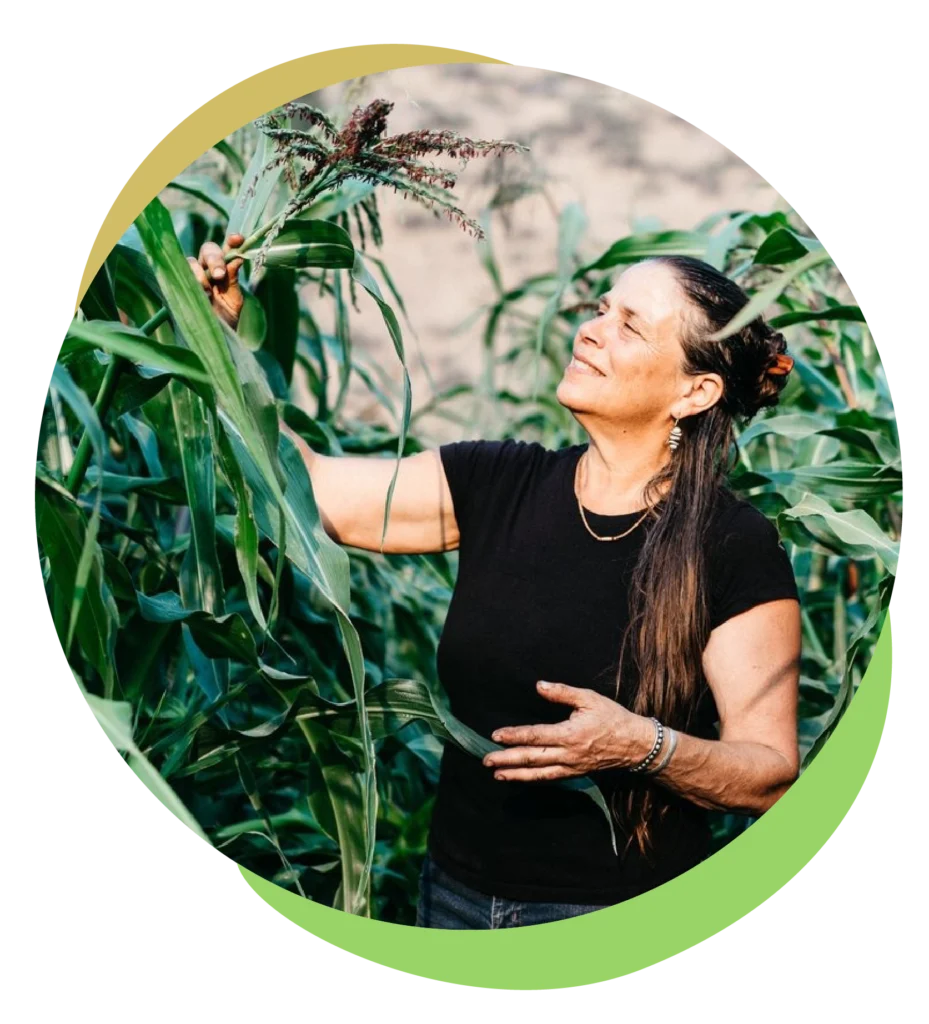
Meet Cloudbrid Bonin — originally from the USA and based in Peru, she connects friends and funders abroad with the network’s projects in Calca, Cusco